A basement floor drain is your home's last line of defense — and the first place a main-line blockage shows itself. When the sewer lateral backs up, wastewater takes the lowest exit, which is the floor drain. It's also where laundry discharge, water heater drips, and dehumidifier lines all converge, so it collects sediment, lint, and mineral scale year-round.
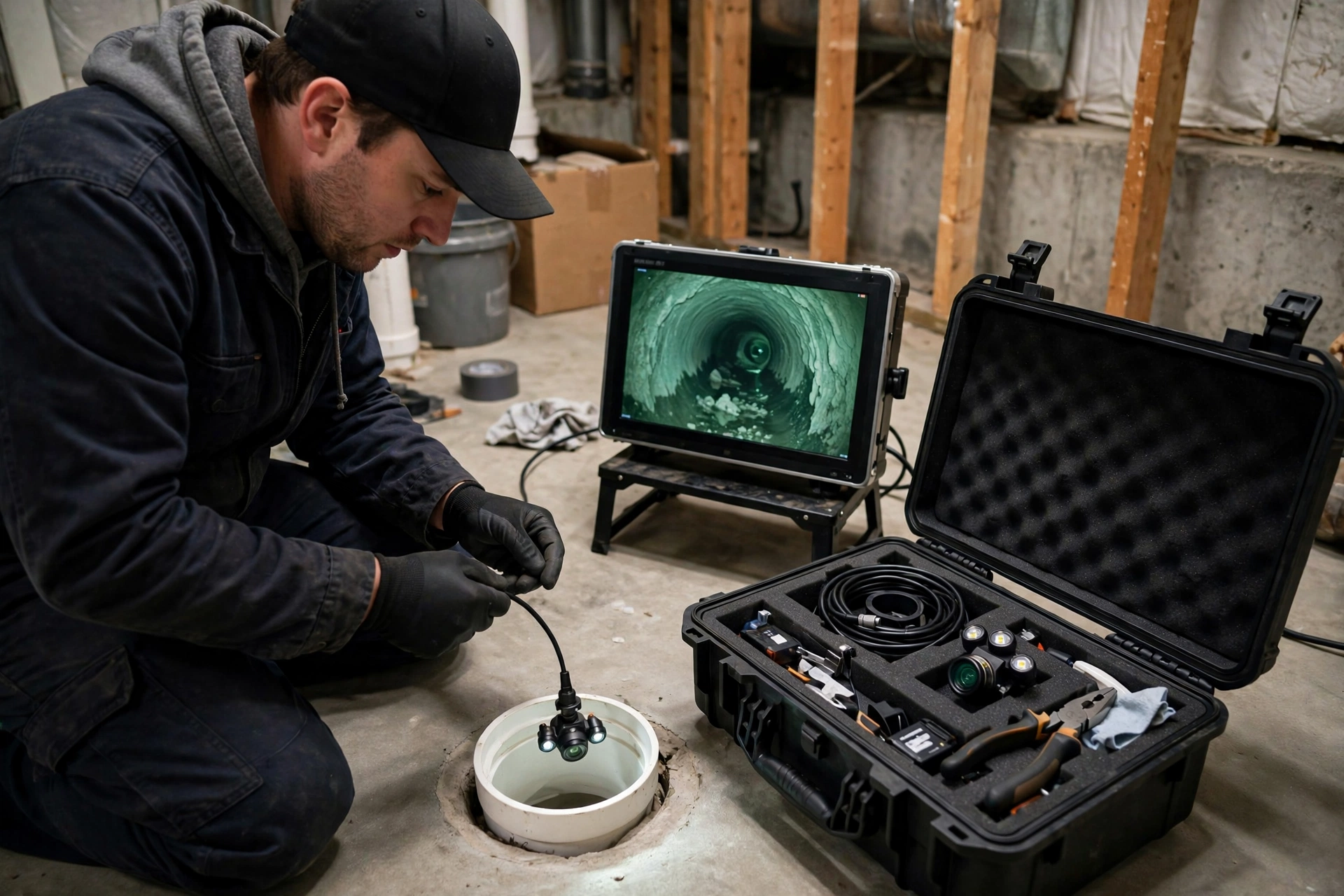
We clear floor drains and diagnose what the backup means: a simple trap or line blockage gets augered and flushed, while a backup that returns points to the main lateral — which we camera-inspect to find the real cause. Floor drains also have traps that dry out and let sewer gas in; we check that too.
If your floor drain is backing up, slow, or smelling like sewage, call. A floor drain problem is either a small fix or the first warning of a main-line issue — either way, it needs a look now.
Signs your floor drain needs attention
- Water or sewage backing up through the basement floor drain
- The floor drain is slow when the washing machine discharges
- A sewage or rotten-egg smell from the floor drain area
- Standing water around the drain after rain or heavy water use
- Gurgling from the floor drain when fixtures run upstairs
How we service your floor drain
1 Determine the source
A backing-up floor drain is a symptom — we find the cause. We check whether it's a local blockage in the drain's trap and line or a main-lateral backup pushing water up through it. The treatment is completely different.
2 Clear the drain and line
The drain's trap and branch line get augered clear of sediment, lint, and buildup, then flushed. We make sure water flows freely from the drain out to the main line.
3 Check the trap seal
Floor drain traps dry out in unused basements, letting sewer gas rise into the house. We verify the trap holds water and show you how to keep it sealed — usually just a periodic bucket of water.
4 Camera if it recurs
If the backup comes back or the camera view suggests a lateral problem, we run the sewer camera from the drain to the street. Floor drain backups are the classic early warning of root intrusion in the main line.
Basement floor drains in Stow
Nearly every Stow home has a basement, and nearly every basement has a floor drain — which makes the floor drain the city's most common backup point. When clay laterals under Stow yards fill with roots, the first symptom in the house is almost always the floor drain: it's the lowest fixture, so it's where the lateral's pressure releases. Laundry rooms compound the issue — lint and detergent residue settle in the drain's trap and line over years. We've seen floor drains that hadn't been touched in decades packed solid with sediment. In Stow, a backing-up floor drain is rarely just a drain problem; it's usually the main line's way of asking for attention.
Need floor & basement drains in Stow?
No forms, no waiting — one call connects you with a local technician.
(555) 123-4567 📞 Call Now